
Robot safety devices play a fundamental role in modern industrial environments. As industrial automation continues to evolve, robots are increasingly responsible for critical production tasks. Therefore, robot safety devices are essential to ensure safe, efficient, and reliable operations.
In addition, these devices enable proper control, monitoring, and protection within robotic cells. As a result, companies can prevent accidents, improve operational precision, and increase overall productivity.
If you are planning to implement or upgrade a robotic cell, understanding these components is crucial
What Are Robot Safety Devices?
Robot safety devices are systems and components designed to protect operators, equipment, and processes in automated environments.
In general, they ensure that robots operate within safe limits. Moreover, they help prevent collisions, detect abnormal conditions, and enable immediate system shutdown when necessary.
Key Robot Safety Devices in Industrial Automation
Safety Light Curtains
First and foremost, safety light curtains are widely used to create protective zones around robotic cells.
These photoelectric sensors form an invisible barrier. Whenever an object or operator crosses this barrier, the system immediately stops or slows down the robot. Consequently, accidents are prevented, and workplace safety is significantly improved.
Safety PLC (Programmable Logic Controller)
In addition, the safety PLC is responsible for managing all safety-related operations.
It processes signals from sensors, emergency stops, and safety devices. Therefore, it ensures that the robot operates within predefined safety parameters. Furthermore, it can perform diagnostics to anticipate failures and avoid unexpected downtime.
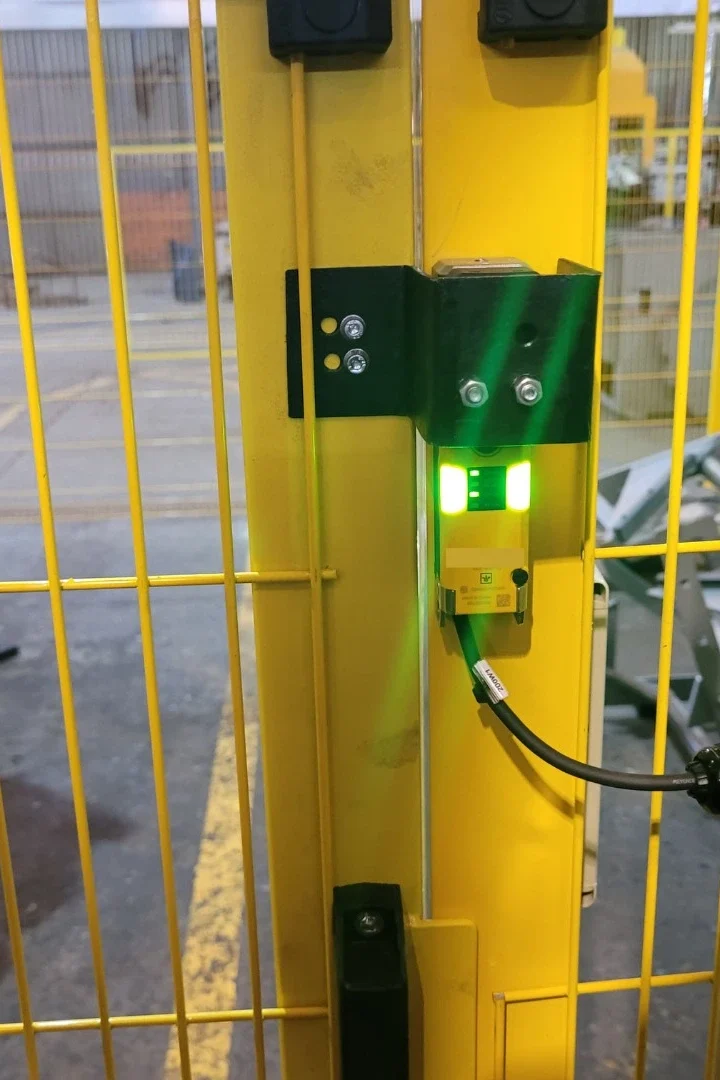
Magnetic Safety Switches
Magnetic safety switches are typically used to monitor access doors and panels.
If a door is opened during robot operation, the system is immediately interrupted. As a result, the risk of accidents is minimized. This solution is simple, yet highly effective in ensuring operator safety.
Proximity Sensors
Proximity sensors detect objects without physical contact.
For example, they are essential in applications involving:
- Sensitive part handling
- Material positioning
- Collision avoidance
Because of this, they allow robots to adapt dynamically to their environment, improving both safety and efficiency.
Torque Sensors
Torque sensors monitor the force applied by the robot.
In particular, they are critical in assembly processes and when handling fragile components. By controlling force levels, these sensors prevent damage and ensure precision.
Robotic Cell Enclosures
Another important element is the physical protection of the robotic cell.
Enclosures can include:
- Metal fences
- Polycarbonate barriers
- Fully enclosed structures
For instance, in welding applications, full enclosure is often required due to sparks and molten material. Therefore, proper enclosure design is essential for both safety and compliance.
Integration and Safety in Robotic Systems
At this point, it is important to highlight that safety devices must be fully integrated into the system.
This includes:
- Communication with PLCs
- Coordination with robot controllers
- Compliance with safety standards
Moreover, proper integration ensures that all components work together efficiently. For more information about remote support, visit:
https://robotersys.com/remote-support-usa/
Benefits of Using Robot Safety Devices
When properly implemented, robot safety devices provide several advantages:
- Increased workplace safety
- Reduced risk of accidents
- Improved operational precision
- Higher system reliability
As a result, companies achieve safer and more efficient production environments.
Common Mistakes in Safety Implementation
However, some common mistakes should be avoided:
- Ignoring safety standards
- Poor integration between devices
- Lack of proper training
- Inadequate maintenance
Therefore, working with an experienced partner like RoboterSys ensures that all safety aspects are properly addressed.
Conclusion
In summary, robot safety devices are essential for any industrial automation project. Without them, even the most advanced robotic systems cannot operate safely or efficiently.
By integrating the right safety solutions, companies can protect their workforce, improve performance, and ensure compliance with industry standards.
RoboterSys delivers complete robotic solutions with a strong focus on safety, integration, and performance—ensuring that every project meets the highest industrial standards.
Frequently Asked Questions
Why are robot safety devices important?
Because they protect operators, prevent accidents, and ensure reliable operation.
What is a safety PLC?
It is a controller designed to manage safety systems in automation environments.
Do all robotic cells require safety devices?
Yes. Safety systems are mandatory in industrial robotic applications.
How to ensure compliance with safety standards?
By following regulations and implementing certified safety components.