Robot automation projects are transforming modern manufacturing by increasing productivity, improving safety, and delivering consistent results. In today’s competitive environment, companies that invest in automation gain a significant advantage.
However, achieving these results requires proper planning. Without a structured approach, automation initiatives can lead to inefficiencies and unexpected costs. Therefore, understanding how to plan and execute these projects is essential.
If you are considering implementing robotics in your production line, this guide presents the key steps—following the same engineering logic applied by RoboterSys in our simulation services
What Are Industrial Automation Projects with Robots?
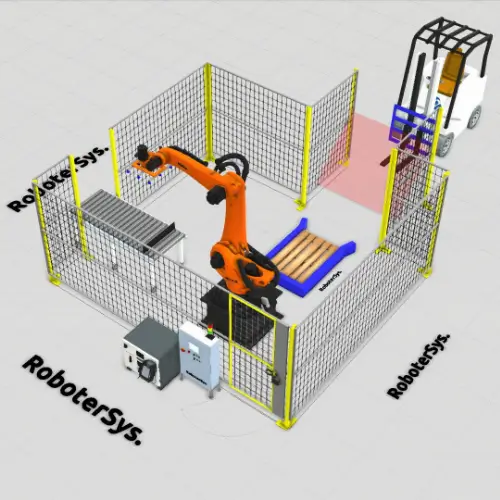
Industrial automation projects with robots involve the integration of robotic systems into manufacturing processes. Typically, these applications include palletizing, welding, and machine tending.
As a result, companies can reduce manual labor while improving consistency and operational efficiency. In addition, automation ensures better process control and repeatability.
How to Plan Robot Automation Projects
1. Analyze Production Needs
First, it is essential to understand which processes can benefit from automation.
For example:
- Repetitive and manual tasks
- High-volume production lines
- Operations requiring precision
By identifying these opportunities early, companies reduce risks and improve project outcomes.
2. Define Clear Objectives
Next, establish well-defined goals such as:
- Increasing productivity
- Reducing waste
- Improving safety
- Standardizing quality
At the same time, define KPIs like cycle time and ROI. This ensures measurable and data-driven results.
3. Select the Right Robotic Solution
Choosing the correct technology is critical.
For instance:
- Welding robots provide consistency in demanding environments
- Palletizing robots eliminate ergonomic risks
- Handling robots optimize machine loading processes
Therefore, selecting the right solution directly impacts efficiency. RoboterSys specializes in defining and delivering the best configuration for each application.
System Integration and Layout Planning
At this stage, proper integration becomes essential.
This includes:
- Factory layout optimization
- Communication with PLC systems
- Implementation of safety systems
Moreover, a well-integrated system prevents bottlenecks and improves overall performance.
For more details on integration and support, visit:
https://robotersys.com/remote-support-usa/
Training and Workforce Adaptation
Even with advanced technology, people remain a key factor.
Therefore, teams must be trained to:
- Operate robotic systems
- Monitor performance
- Perform basic maintenance
As a result, companies ensure long-term success and operational stability.
Testing and Simulation
Before full deployment, validation is crucial.
In particular, simulation tools allow:
- Cycle time estimation
- Layout validation
- Identification of potential issues
Consequently, adjustments can be made before implementation, reducing risks and costs.
Monitoring and Maintenance
After implementation, continuous monitoring is required.
Preventive maintenance ensures:
- System reliability
- Reduced downtime
- Extended equipment lifespan
In the long term, this guarantees consistent performance.
Key Benefits of Automation
When properly implemented, automation delivers:
- Higher productivity with continuous operation
- Lower operational costs
- Improved safety conditions
- Consistent product quality
Common Mistakes to Avoid
Despite the advantages, some common errors include:
- Lack of proper planning
- Poor system integration
- Insufficient training
- Ignoring maintenance
Avoiding these mistakes is essential. Working with an experienced partner like RoboterSys significantly reduces these risks.
Conclusion
In summary, robot automation projects are a strategic investment for companies seeking efficiency and competitiveness. However, success depends on proper planning, integration, and execution.
By following the steps outlined above, it is possible to achieve reliable and high-performance results.
RoboterSys delivers complete simulation solutions, combining engineering expertise, simulation, and integration knowledge
Frequently Asked Questions
Why invest in automation?
Because it improves productivity, reduces costs, and enhances safety.
What is the expected ROI?
Typically between 1 and 3 years, depending on the application.
Can robots replace human labor?
No. They complement human work and increase efficiency.
Which industries benefit the most?
Automotive, food, pharmaceutical, and logistics sectors.
How to ensure safety?
By implementing safety systems, standards, and proper training.